
Good Hospitals and Clinics stall for one reason. Capital is hard to get, slow to arrive, and comes on terms nobody explains. We prepare the business, bring the right investors, and stay involved after the money lands.
Industry estimates for the Indian private healthcare sector. Indicative, for context.
There is capital in India looking for steady returns from real businesses. There are Hospitals and Clinics that need it to grow. We sit in the middle and do the work that lets the two meet properly.
Most Hospitals and Clinics are not fundable as they stand. Proprietorship, mixed books, no clean numbers. We fix that first, then bring the capital.
The ground between a fixed deposit and a startup. Real businesses that treat patients every day and generate cash while doing it.
Too small for large private equity funds. Underserved by banks, who lend against property rather than cash flow. That gap is where we work.
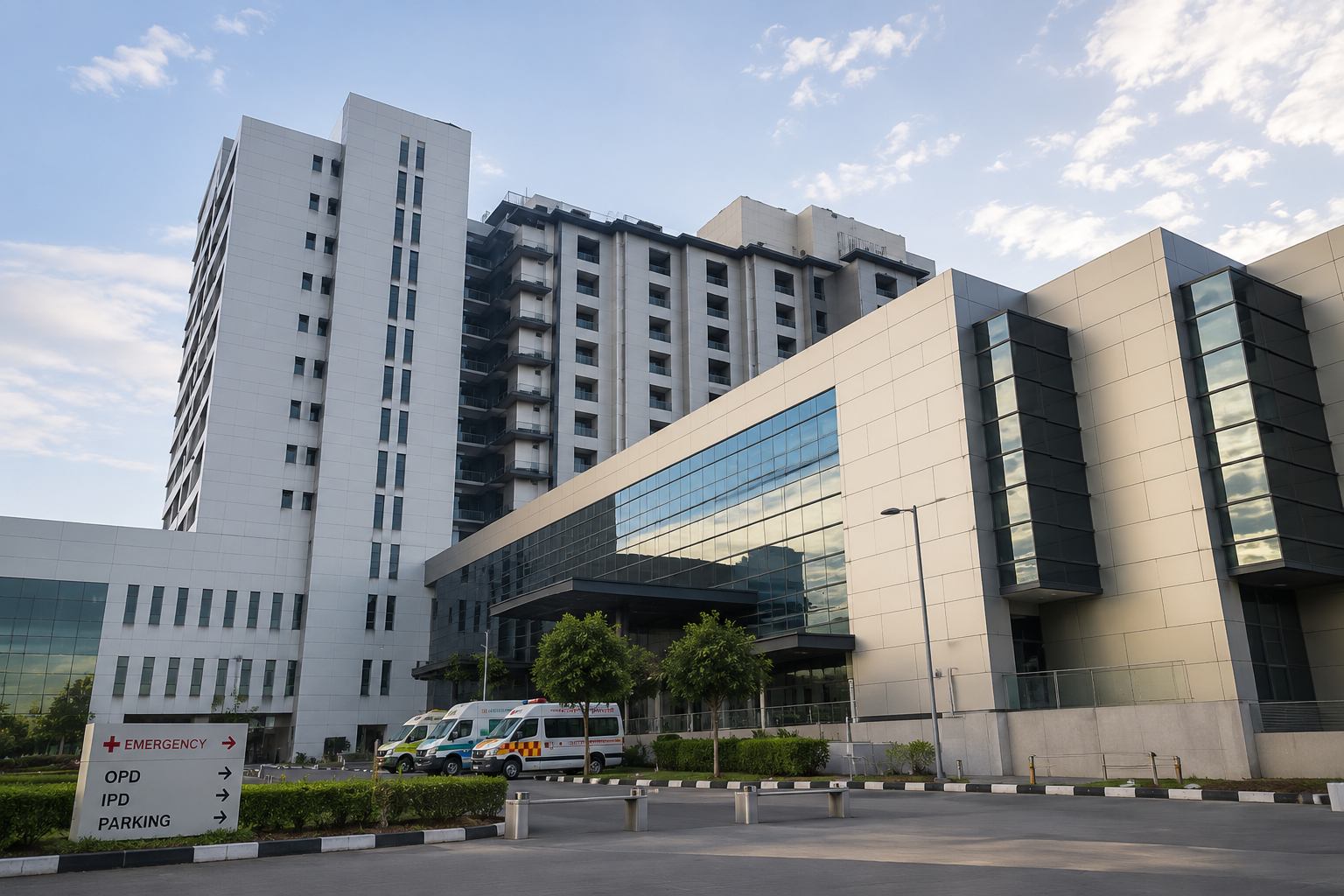
Nursing homes and small hospitals. Often family run, often profitable, and carrying problems a clinic never has.

Single-specialty practices, day-care centres and diagnostics. Dental, eye, dermatology, IVF, dialysis, physiotherapy.
Not everyone needs all four. Some businesses only need the preparation. Some are ready and need the right investor. Some want a partner who does the work alongside them.
We fix what stops a good business from being fundable. Structure, books, licences, numbers, valuation. No capital raised yet. This is the groundwork.
Three to six monthsWe size the requirement, pick the right instrument, and introduce you to investors who fund businesses like yours. Terms are agreed directly between you and them.
Two to four monthsWe put in capital and operational work over 18 to 24 months, take a minority stake, and are repaid from the growth we help create.
18 to 24 monthsWe prepare the business for sale, find the right buyer, and run the process. Chains, PE platforms, or another doctor. Starting early is worth real money.
Prepare two to three years aheadA valuation and readiness check on your business. No obligation, and no commitment to raise anything afterwards.
The same sector can be approached at very different levels of risk. Most of what we bring sits at the lower end. Secured, cash generating, asset backed. The higher rungs exist for investors who want a small allocation there.
Funding tied to a specific machine at an established provider. The asset stands behind the money and usually earns from the first month.
Hospitals wait up to four months for insurance and government scheme claims to settle. Funding against verified claim invoices bridges that gap and clears as the claims are paid.
Debt into a profitable Hospital or Clinic with two or three years of filed accounts, secured against business assets or cash flow. You are a lender. You rank ahead of equity and take no dilution risk.
Money into a proven business that is expanding. A second location, a new department, added beds. Structured to pay a coupon while the expansion matures, then convert on terms agreed at the start.
Backing a Hospital or Clinic group buying another. Event driven, with a defined use of funds and security over the acquired business.
An ownership stake in an operating provider. An existing business scaling up, or a new build with an experienced clinician behind it. Returns depend on how the business performs and there is no fixed obligation to you.
Occasionally an early-stage opportunity we understand well enough to bring forward. Outcomes are binary and the horizon is long. Nothing else on this ladder works this way, and we keep it separate on purpose.
Risk indicators are relative to each other within this ladder, not absolute measures. Every rung, including the lowest, carries the risk of loss.
Insurance is reaching hundreds of millions of people. Patients are choosing where they go. Capital has entered the sector but sits mostly at the top. Six forces are reshaping how these businesses run, and how they get paid.
Ayushman Bharat covers more than 500 million people and ESI over 150 million workers. Cashless treatment is now normal, which changes how a hospital gets paid and how long it waits.
People compare, read reviews, travel further for quality and pay out of pocket for elective care. Reputation and experience now drive volume as much as referral does.
Private equity has moved into Indian healthcare, but it concentrates in large tertiary chains and platforms. The layer below stays outside the system.
An ageing population, rising chronic disease and higher incomes are pressing on a system still short of beds against WHO norms, especially outside the metros.
GST, digital payments, ABDM and the claims exchange are pulling providers into recorded revenue. A recorded business is a financeable business.
Chains and PE-backed platforms are buying single-specialty clinics and small hospitals. Owners who prepare early get better terms than those who react late.


Four things that shape how we do this, and that both sides should know upfront.
Every transaction stands on its own numbers, its own structure, its own decision. We do not pool money into a common fund and we never hold investor capital.
Learn more →Capital should help a business grow, not take it over. Our structures keep the clinical decisions, and the practice, with the people who built it.
Learn more →The unglamorous work comes first. Books, structure, licences, valuation. What reaches an investor has already been through it.
Learn more →We prepare and present, including what we think is weak. The investment decision is always the investor's own, made on their own assessment.
Learn more →Insights on how Hospital and Clinic economics, valuation and funding work in Indian healthcare. For the people running these businesses and the people funding them.
Yes. That is where most businesses start with us. Moving from informal accounts to a proper company with clean, auditable books is the groundwork that makes funding possible. It takes a few months to fix, and then a period of clean trading before investors are comfortable.
Not for most of what we do. Secured lending, equipment finance and receivables funding leave your ownership and clinical control untouched. Equity and growth partnerships bring in a partner, but clinical decisions, patient care and clinical hiring stay with you, in writing.
Yes, and it is a different conversation from funding an existing business. A new build carries no trading record, so it is usually equity or a growth partnership rather than debt. What matters most is the clinician behind it, the location, and how quickly patients are likely to follow.
Deals from about ₹50 lakh to ₹40 crore. Hospitals up to roughly 100 beds, nursing homes, single-specialty clinics, day-care centres and diagnostics. Anything materially larger sits with investment banks and we will refer it on rather than pretend.
No. We do not offer or promise assured returns, and you should be cautious of anyone in this space who does. We present real opportunities with the numbers laid out, including the weak parts. Every investment carries risk, including loss of capital.
No. We work deal by deal. You invest directly into a specific Hospital or Clinic that you can see, visit and assess. There is no pooled vehicle, and we never take custody of your money.
Providers pay a modest fixed fee for readiness work, charged in stages, and a success fee if a transaction closes. In a growth partnership we take equity and put our own capital in. We tell both sides what we earn before anyone commits.
If you run a Hospital or Clinic, tell us what you are trying to do next. If you want to invest, tell us what you are looking for. We will be straight about whether we are a fit.